
Manufacturing Website Design: How to Win More B2B Contracts Online in 2026
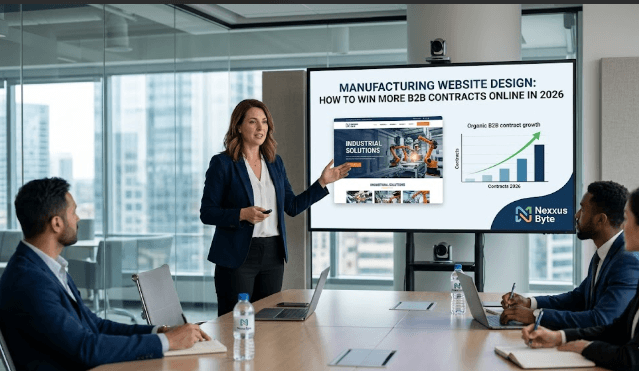
The manufacturing sector has traditionally relied on trade shows, referrals, and direct sales relationships for business development. While these channels remain valuable, the procurement landscape has fundamentally shifted. Today, over 67% of B2B buyers conduct significant online research before contacting a vendor and in manufacturing, this number is growing every year as a new generation of procurement managers replace retiring ones.
Your manufacturing company’s website is now your most important sales tool. This guide explains exactly how to design and optimize a manufacturing website that generates qualified B2B leads and wins contracts.
What Procurement Managers Look For on a Manufacturing Website
Understanding your buyer is the foundation of effective B2B web design. Manufacturing procurement managers are evaluating websites for very specific information, and if they cannot find it quickly, they move on to a competitor.
The critical information they need includes: your manufacturing capabilities and specifications, materials and processes you work with, quality certifications (ISO, AS9100, IATF 16949, etc.), production capacity and lead times, minimum order quantities, industries and applications you have served, and case studies or references from similar clients. If your website does not prominently feature this information, you are losing contracts before a single conversation happens.
Technical Capability Pages: The Core of Manufacturing SEO
Where most manufacturing websites fail on SEO is in the specificity of their service pages. A page titled ‘CNC Machining Services’ that contains three paragraphs will not rank for the specific terms procurement managers use when searching. They search for terms like ‘precision CNC turning stainless steel aerospace tolerances’ or ‘plastic injection molding low volume production.’ These are the keywords your capability pages need to target.
Each capability needs its own dedicated page with: technical specifications your equipment can achieve, materials you work with, tolerances you hold, typical applications and industries, and supporting certifications. This depth of technical content signals to Google that you are a legitimate industry specialist and attracts the exact searchers who need your specific capabilities.
Building Trust With Industrial Buyers Online
Procurement in manufacturing involves significant financial commitments and supply chain risk. Your website must build extraordinary trust before a buyer will initiate contact. The trust signals that matter most to industrial buyers are different from those that matter to consumer businesses.
Most impactful: facility photos showing your actual shop floor and equipment, equipment lists with specific machine models and year, quality documentation showing certifications with certificate numbers, case studies with quantifiable results (tolerance achieved, cost reduction percentage, delivery performance), and any awards, recognition, or participation in industry associations.
The Industrial Buyer Journey and How to Support It
B2B manufacturing sales cycles are long. A buyer might research suppliers for 3 to 6 months before requesting a quote. Your website needs to serve them at every stage of this journey, not just when they are ready to buy.
Create content for early-stage researchers: industry application guides, material selection guides, ‘how to choose a [manufacturing process] supplier’ articles. Create mid-stage comparison content: capability comparison tables, quality standards explained, common manufacturing defects and how you prevent them. Create late-stage conversion content: streamlined RFQ forms, sample part request processes, clear communication about lead times and minimum orders.
| Manufacturing Website Must-Haves |
| Dedicated capability page for each manufacturing process with technical specifications |
| Quality certifications displayed prominently on homepage and relevant service pages |
| Facility photo gallery showing equipment and shop environment |
| Streamlined online RFQ (Request for Quote) form |
| Industry-specific case studies with measurable outcomes |
| Equipment list with machine models and specifications |
Manufacturing SEO: Keywords That Actually Drive B2B Leads
The keyword strategy for manufacturing SEO is fundamentally different from consumer SEO. Volume is low but intent is extremely high. A search term like ‘precision sheet metal fabrication aerospace supplier’ might be searched only 50 times per month globally, but those 50 searches represent procurement managers with substantial purchasing authority.
Build your keyword strategy around process + material + industry combinations. Examples: ‘aluminum die casting automotive supplier,’ ‘medical device contract manufacturing FDA registered,’ ‘custom electronics enclosure fabrication low volume.’ These specific, technical terms attract exactly the buyers you want with minimal competition.
| Nexxus Byte designs manufacturing websites that speak the language of procurement and rank for the technical terms B2B buyers search. Explore our manufacturing digital marketing services at Manufacturing Website Design and manufacturing seo. |
Frequently Asked Questions
What makes a manufacturing website different from a service business website?
Do manufacturing companies really generate leads from their website?
DUI Attorney Near Me: Find Experienced Defense and Protect Your Rights Immediately
You were arrested for driving under the influence. You are frightened. You face potential jail...

Emergency Roof Repair Near Me: How to Find Licensed Contractors and Minimize Storm Damage
A storm just hit your area. Your roof is leaking. Water is dripping into your...

Plano Roofing Companies: How to Get More Leads Without Dependence on Referrals
Plano, Texas has experienced explosive growth over the past decade. Home prices have increased 85...